
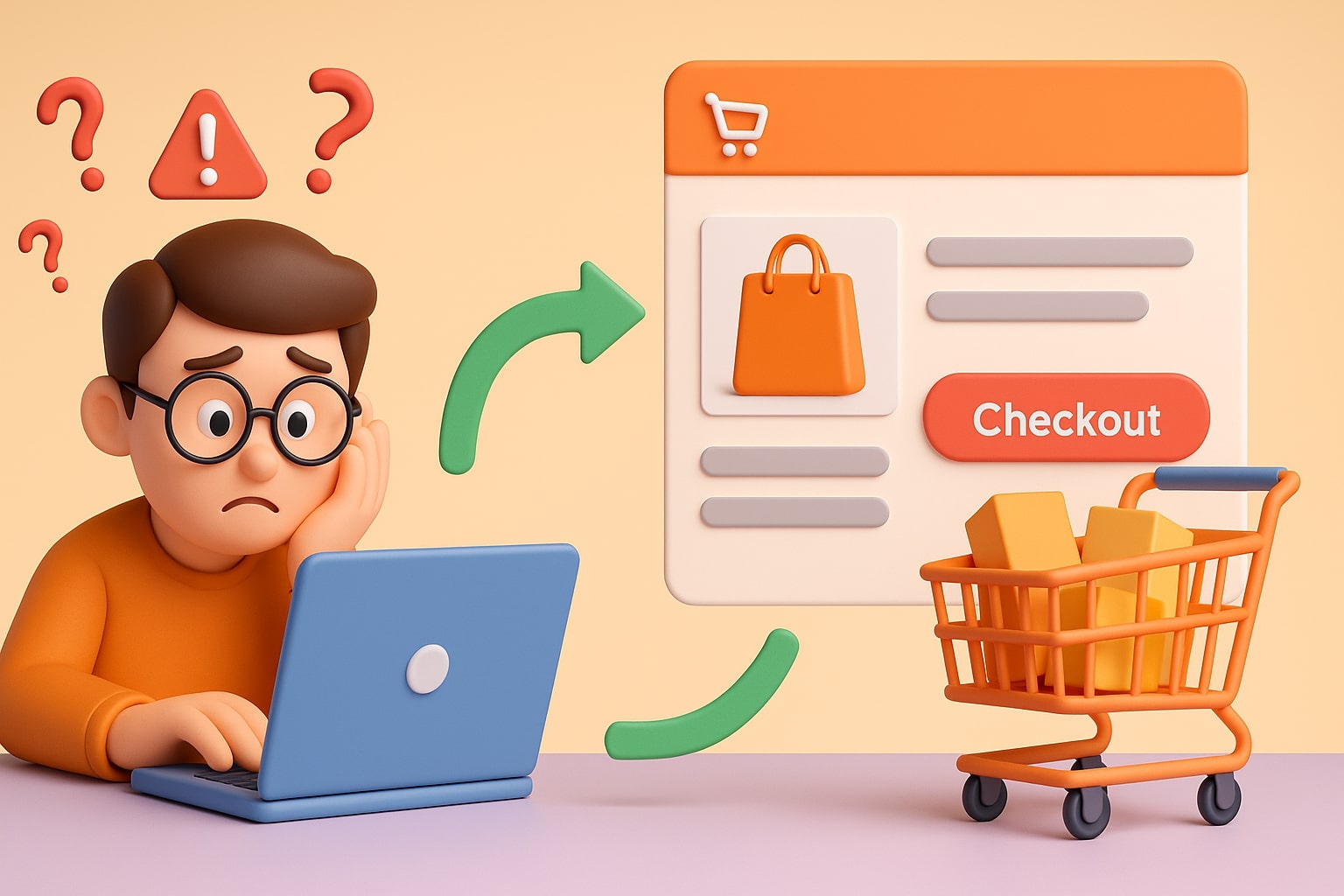
The cart abandonment rate is one of those indicators that any digital business observes with a mixture of frustration and curiosity. You watch as users browse, add products, appear ready to purchase… and then, suddenly, they disappear. Almost without explanation. Just a full cart that never becomes a sale.
This phenomenon is as common as it is concerning, and it affects both small shops and e-commerce giants alike. The good news, however, is that there are effective strategies for reducing shopping cart abandonment and thereby improving the profitability of your website.
In this article we will examine why it occurs, what factors influence it, and how you can reduce the cart abandonment rate through clear and actionable measures. And, of course, how Doowebs can help you implement these improvements professionally.
What cart abandonment is and why it is so common
Before applying solutions, it is worth establishing the concept clearly.
The definition of cart abandonment is fairly straightforward: it occurs when a user adds one or more products to their basket, begins or does not begin the payment process, and at some point decides not to complete the purchase.
But the key question is: why do they do it? It is not always due to a lack of intent. In many cases, the problem lies in the experience during the purchasing process.
Main reasons for cart abandonment
In order to reduce cart abandonment, one must first understand its causes. The following are the most common.
1. Unexpected costs
Shipping costs, additional fees, or price increases at the final step are the number one reason why people abandon their carts.
2. Mandatory registration
Requiring users to create an account before purchasing remains a significant barrier. Many users simply want to pay and leave.
3. Complicated payment process
Lengthy forms, too many steps, or unclear fields are enough to exhaust anyone’s patience.
You may also be interested in → Common errors in the creation of web forms and how to resolve them
4. Lack of payment methods
If users cannot find their preferred payment method, they will simply move on to another shop that offers it.
5. Security concerns
When the design or process generates distrust, the customer thinks twice before proceeding.
6. Slow or poorly optimised website
A clumsy or unresponsive user experience brings the purchasing process to an abrupt halt. This is particularly noticeable on mobile devices.
How to reduce the cart abandonment rate in your e-commerce store
From this point on, we will examine real, applicable, and above all effective solutions.
Complete price transparency
One of the most direct ways to reduce the cart abandonment rate is to avoid unpleasant surprises. Here are the key points for doing this effectively.
- Make shipping costs visible from the outset: Do not conceal them until the final step. You can display them on the product page or through a prior shipping calculator.
- Offer free shipping if possible: And here the key question arises: how much does free shipping reduce cart abandonment? According to some studies, abandonment can be reduced by as much as 20% when free shipping is presented clearly and prominently.
- Include a free shipping progress bar: «You are X euros away from free shipping». This works very well and also increases the average order value.
Simplify the purchasing process
Many carts are lost due to cognitive overload. If the process is lengthy or confusing, the user disengages. The following are concrete improvements to address this.
- Enable guest checkout: Allow the customer to complete their order without registering. You will have plenty of opportunity afterwards to encourage them to create an account.
- Reduce the number of checkout steps: A single-screen checkout typically converts better, but if you prefer to maintain multiple steps, ensure they are clear and swift.
- Request only what is necessary: Every additional field in a form represents a potential abandonment point.
Optimise speed and the mobile experience
Today more than 70% of traffic comes from mobile devices, yet many shops are still not truly prepared for this. A slow or uncomfortable experience on small screens significantly increases the cart abandonment rate on the website.
- Improve performance: Image optimisation, lazy loading, and a reliable hosting provider are essential.
- Large buttons and simple processes: No small text or buttons that are impossible to tap.
- Avoid unnecessary redirects: Anything that disrupts the purchasing flow reduces conversions.
Build user trust
It is not enough to be a secure e-commerce store; you must also appear to be one. Trust has a direct impact on purchase intent and on reducing cart abandonment.
- Add security badges and well-known payment methods: PayPal, Apple Pay, or Bizum provide both security and convenience.
- Include verified reviews: Ratings help to minimise user uncertainty during the purchasing process.
- Professional and consistent design: A well-crafted shop conveys reliability. This is where the expertise in WooCommerce web design at Doowebs can help you refine every detail so that the experience is solid and professional.
Implement reminders and remarketing
Although the ideal is to prevent abandonment, recovering a portion of those lost carts is entirely possible. Let us look at how to do so without being intrusive.
- Abandoned cart emails: These work, but only if they are well conceived. Personalise them and use them to address doubts or highlight key benefits.
- Offer a modest incentive: A moderate discount or the possibility of free shipping can win back an undecided user.
- Remarketing on social media and Google Ads: Visible only to those who abandoned. It is an effective strategy when applied with moderation.
Analyse, measure, and continuously improve
Reducing the cart abandonment rate is not a one-off adjustment, but an ongoing process. The key lies in measuring what happens at each stage of the purchasing process.
- Use tools such as Google Analytics 4 or Hotjar: These allow you to identify where users get stuck and which points generate friction.
- Conduct A/B tests: Changing a button colour alone will not solve everything, but testing new designs or copy can genuinely improve conversion.
- Update your e-commerce store regularly: Plugins, payment gateways, optimisations… Everything contributes to reducing cart abandonment.
Reducing the cart abandonment rate does not depend on a single magic solution, but on a combination of small yet strategic actions. Transparency, fluidity, security, and a frictionless experience are the cornerstones.
If you need help optimising your e-commerce store, at Doowebs we handle both the development and the continuous improvement of websites so that they perform at their best. We will be delighted to review your shop and propose concrete improvements.
Would you like to reduce cart abandonment and increase your sales? Contact us and let us start improving your e-commerce store today.